Reducing Friction Across Sales, Finance, and Marketing
Everyone wants growth. The friction starts when each team has different incentives.
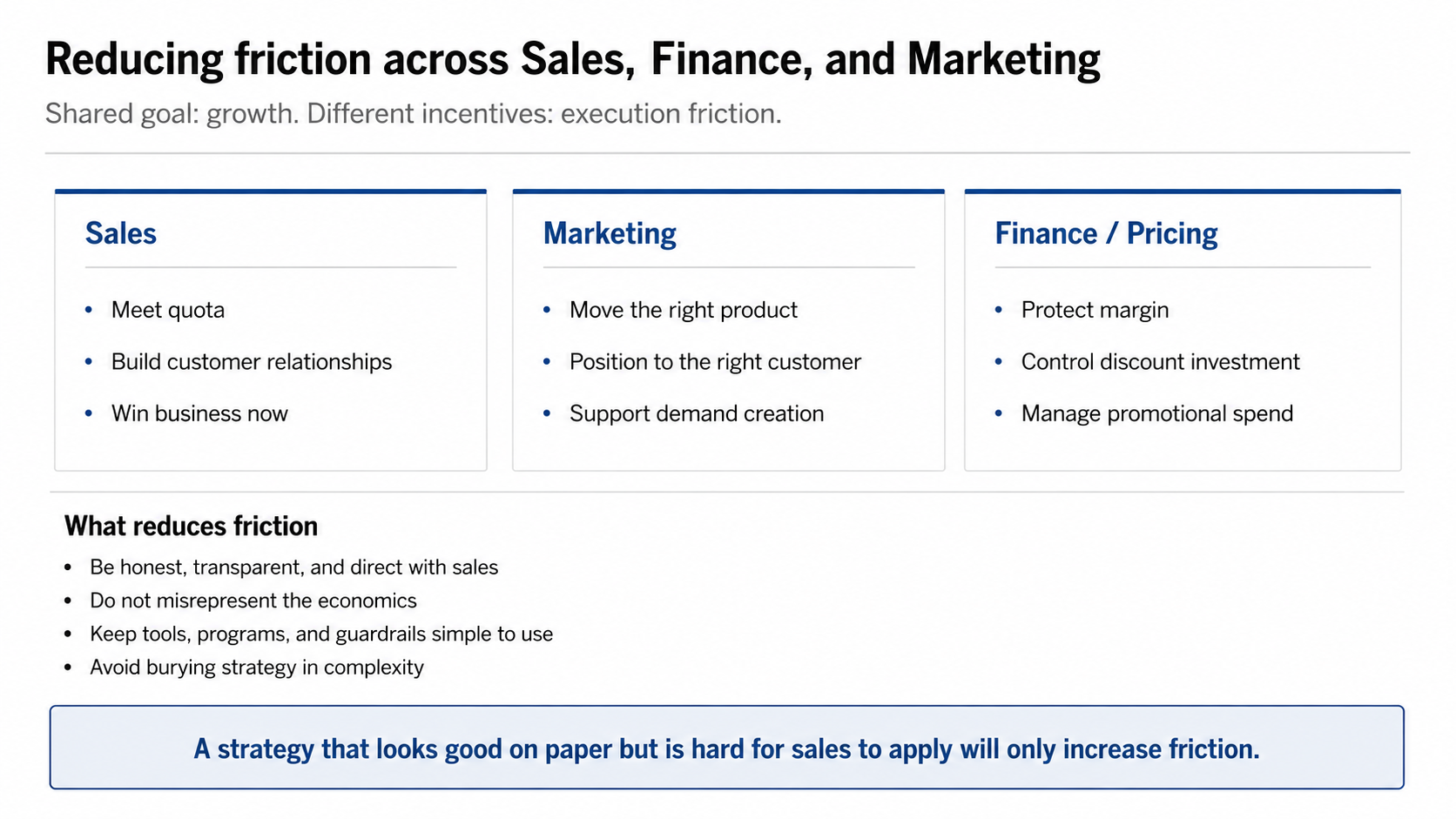
At every role I’ve had, there has always been friction between sales, finance, and marketing. They all have the same goal: sell more. But they have different incentives.
Finance wants margin, volume, ideally both.
Marketing wants to move the correct product, positioning, and clients.
Sales wants to meet their quotas and build relationships with their customers.
Even though they all look like they want the same thing, they are fundamentally different.
The friction is not always the goal
From the pricing and finance teams, we are always cautious about what we can share, how much margin we can invest in discounts, how far we can take promotions, or how much we can pay for different forms of advertising.
That caution is not wrong. Finance and pricing have to protect the economics. But if the strategy becomes too hard for sales to understand or apply, the friction only grows.
Be direct with sales
The key is being honest, transparent, and direct with sales.
Don’t misrepresent. Don’t overcomplicate. Everyone wants to move the product. We need to empower sales to use the tools, programs, and strategies that are available to them.
If you bury them in information or make it impossible for them to apply the strategy you have on paper, the friction will only grow.
Bottom line
A strategy that looks good on paper but is hard for sales to apply will only increase friction.
FAQ
Why is there friction between sales, finance, and marketing?
They usually share the same growth goal, but each team is measured against different incentives and risks.
What reduces friction with sales?
Clear guardrails, honest economics, simple tools, and strategies sales can actually use with customers.
Why does overcomplication hurt execution?
Because a strategy that is too hard to explain or apply turns into more confusion, not better execution.